Right before this last snowfall, I spotted crocus and daffodils coming up in my yard. This group of robins, huddled in the neighbor's apple tree, makes me hopeful. Perhaps best of all, I made some yarn butterflies for a baby sweater. My daughter and her husband are expecting their second child in August. Butterflies and robins in February, wind and snow in March, and a new grandchild in August are sure signs of a changing season.
Tuesday, March 12, 2013
Butterflies and Robins in the Winter
Right before this last snowfall, I spotted crocus and daffodils coming up in my yard. This group of robins, huddled in the neighbor's apple tree, makes me hopeful. Perhaps best of all, I made some yarn butterflies for a baby sweater. My daughter and her husband are expecting their second child in August. Butterflies and robins in February, wind and snow in March, and a new grandchild in August are sure signs of a changing season.
Sunday, February 24, 2013
Teacher, What did you learn on your snow days?
Note for non-knitters: Frogging and frog pond are not terms I created. Frogging is knitting jargon for the process of pulling needles out of all stitches and then tugging on the yarn to rip out a knitted piece. Rip it, rip it, rip it sounds like the ribbit, ribbit, ribbit of frogs. Frogging is faster than tinking back. Tink, knit spelled backwards, is undoing one stitch at a time. It is more tedious but sometimes necessary when repairing mistakes in textured or lace knitting.
During the two snow days last week, I ripped out an entire winter's worth of knitting. I learned some worthwhile lessons from the frog pond.
1. Although knitting cardigans in one piece is tempting, patterns with more structure suit me better. Seaming sweater pieces takes time but is not something I will actively avoid in the future. Even when knitting sweaters in one piece, button bands and some sort of ribbing or edging give a garment more structure and fit.
Greenfield Cardigan: When I tried on the body of the sweater, the bottom rippled, the neckline sagged off my shoulders, and the fronts drooped. The leaf motif in the bottom front corners puckered. This pattern make work well for others but I prefer a more fitted sweater. I ripped the entire piece out and saved the yarn for future inspiration.
2. There are no knitting police. Although the designer intended for one edge of the Deephaven Cowl to curl, I prefer two finished flat edges. I ripped out 8 inches of the cowl and started over with a pattern modification and one size larger needles. Larger needles make the tension in the stitches more comfortable for my hands and wrists. Before casting on the cowl, I tried to knit a vest with the "Prairie Silk" yarn by Brown Sheep. Even though I was knitting the yarn for the third time, it felt as if it had never been used. Brown Sheep Company no longer manufactures this yarn which is all the more reason to savor knitting the cowl. I hope to have enough yarn to make a matching pair of mittens.
Deephaven Cowl by Blue Peninsula Designs
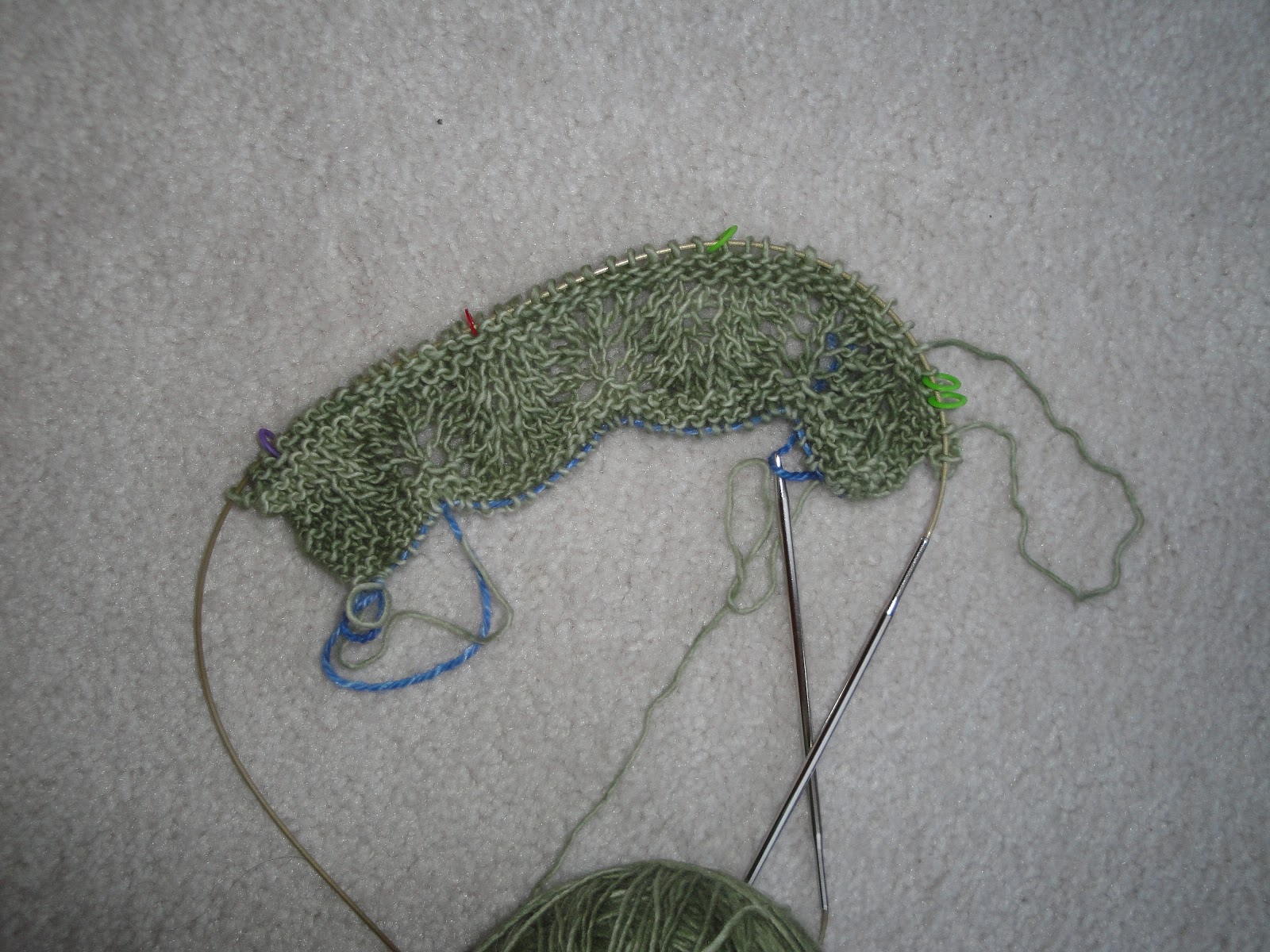
3. I need to learn more about shaping shawls by adjusting short rows. While knitting Twig and Leaf Shawl, I knew I'd run out of yarn before I came to the end of the project. In order to compensate, I increased the the length of short rows by one stitch. Doing this on enough rows to use 400 yards of yarn made an extremely long but narrow crescent shape garment that was neither shawl nor scarf. I'm sure if I had knit the shawl in lace weight instead of fingering weight AND shaped the shawl as the pattern directed, the result would have been beautiful. The mistake is not the designers but mine. The yarn is too pretty to waste so I ripped it all out and cast on another scarf.
Shallows by Blue Peninsula Designs
4. Bonnie Sennot, the designer of Blue Peninsula Knits writes an artistic blog. Her photos and posts are as lovely as her knitwear designs. The blog is inspiring in any weather.
During the two snow days last week, I ripped out an entire winter's worth of knitting. I learned some worthwhile lessons from the frog pond.
Greenfield Cardigan: When I tried on the body of the sweater, the bottom rippled, the neckline sagged off my shoulders, and the fronts drooped. The leaf motif in the bottom front corners puckered. This pattern make work well for others but I prefer a more fitted sweater. I ripped the entire piece out and saved the yarn for future inspiration.
2. There are no knitting police. Although the designer intended for one edge of the Deephaven Cowl to curl, I prefer two finished flat edges. I ripped out 8 inches of the cowl and started over with a pattern modification and one size larger needles. Larger needles make the tension in the stitches more comfortable for my hands and wrists. Before casting on the cowl, I tried to knit a vest with the "Prairie Silk" yarn by Brown Sheep. Even though I was knitting the yarn for the third time, it felt as if it had never been used. Brown Sheep Company no longer manufactures this yarn which is all the more reason to savor knitting the cowl. I hope to have enough yarn to make a matching pair of mittens.
Deephaven Cowl by Blue Peninsula Designs
3. I need to learn more about shaping shawls by adjusting short rows. While knitting Twig and Leaf Shawl, I knew I'd run out of yarn before I came to the end of the project. In order to compensate, I increased the the length of short rows by one stitch. Doing this on enough rows to use 400 yards of yarn made an extremely long but narrow crescent shape garment that was neither shawl nor scarf. I'm sure if I had knit the shawl in lace weight instead of fingering weight AND shaped the shawl as the pattern directed, the result would have been beautiful. The mistake is not the designers but mine. The yarn is too pretty to waste so I ripped it all out and cast on another scarf.
Shallows by Blue Peninsula Designs
4. Bonnie Sennot, the designer of Blue Peninsula Knits writes an artistic blog. Her photos and posts are as lovely as her knitwear designs. The blog is inspiring in any weather.
5. Ripping out a winter's worth of knitting wasn't nearly as painful as I anticipated. In fact it is rather freeing. Now, I don't have to soldier on with projects that aren't going to have good results. I'm just getting more enjoyment for the same amount of yarn money.
6. Knitting is both process and product. This winter my knitting was about process. I wonder if I could be as philosophical about my writing pieces and process. Both require practice, patience, and persistence. The finished products can be lovely and inspiring or frumpy and frustrating. Sometimes yarn is better suited to a soft scarf than a shawl. A piece of writing that begins as an essay ends up as a poem. While editing improves all writing, there are times when it is best to begin again.
7. Snow day lessons are as tricky as the weather in Nebraska. As an example Storm Q which was predicted to bring as much as 18 - 20 inches dropped six inches instead.

Sunday, January 6, 2013
Gray Wool in January
I love the peace and quiet of January. Whether the sky is brilliant blue or deep gray, I find the contrast with bare trees and neutral colors restful. Simple meals of soup, fruit, and bread warm my body while quiet evenings indoors with a book, journal, or knitting restore my spirit. Early mornings and evenings, I wrap a shawl around my shoulders. These days, I'm enjoying my latest finished object, a Gray Wool Shawl.
In 2005, I began writing a story about my great grandmother and a gray wool shawl she made by unraveling yarn in an old sweater. In 2009, while helping my Dad to the end of his life, I began the first gray wool shawl. I cast on stitches while I was at a Windbreak House Writing Retreat. As I watched daylight fade from the short grass prairie, I taught myself to purl stitches using the continental method. Although, I loved the gray shade of the worsted weight wool/alpaca yarn, I decided the checkerboard pattern stitch was not something my practical great grandmother would have chosen. When I returned home, I ripped out the stitches and cast on a garter stitch shawl. After knitting on the piece for quite some time, I admitted to myself the fabric was stiff enough to be a horse blanket. Once again, I ripped out the shawl. Eventually I knit a lovely warm sweater from the yarn.
Next I tried knitting a shawl from a lighter weight deep charcoal gray yarn and a beautiful Mountain Colors Yarn of deep variegated colors. The weight of the charcoal yarn was suitable but the combination of the yarns created a triangular shawl that rippled in an unattractive way. Both of these yarns eventually became mittens given as Christmas gifts.
In July 2011, I bought some soft gray Frog Tree alpaca yarn spun into sport weight and cast on the Wool Peddlers Shawl. I adapted the pattern in several ways. I began with a garter stitch tab because it creates a more finished look. For the same reason, I changed the increases along the center spine of the shawl. I also added one stitch to each edge because I think two stitches look better and are less prone to snagging. I finished the shawl on November 30, 2011.
In between all this knitting, I revised the Gray Wool Shawl Story several times. I'm still not certain the latest version accurately reflects my great grandmother's time and place so I'm about to work on the story again. Like knitting, writing benefits from revision and new beginnings. Perhaps the quiet space in January will be conducive to a better story. Happy New Year!
Sunday, December 2, 2012
Anniversary Sweater
In mid-July 2012, I began looking for a knitting project to soothe my way through the back to school routine and mother of the groom moments. Aaron was being married three weeks after my fall semester began. After rummaging through storage bins, I decided to make a sweater from a mohair/wool yarn I had purchased ten years ago. "Tiur" by Dale of Norway is a soft, warm, sturdy yarn but I wondered why I had chosen the bright color. Maybe I had been thinking of Gram. She loved pink in all shades. She painted her nails, the kitchen cupboards, bathroom walls, and woodwork pink. She also knit several pink sweaters. Even though I had reservations about knitting the yarn, she would have loved the color and the sweater.
As I worked the test swatch, I remembered the day I bought the yarn. Lance and I had traveled to New England to celebrate our 25th wedding anniversary. That rainy, damp October day, we took a break from looking at fall foliage to have lunch in Laconia, New Hampshire. After eating beside a fireplace in a cozy sandwich shop, Lance went out to the car with a book and I headed into the small yarn shop. The owner knitted behind the counter as I examined yarn and labels. When I finally made my selection, she gave me good advice on yardage for a cardigan.
Ten years later while browsing Ravelry, I discovered the Miriam cardigan published by Quince and Company. Located in Maine, the independent company sells patterns created by company owners as well as independent designers. They spin yarn from American wool and fibers grown in an earth friendly manner. The pattern and the yarn were a good match.
As I knit the body of the sweater in July and into August, the knitting collected my anxious thoughts and good wishes for my son's wedding. The rehearsal dinner, wedding, and reception went well. Aaron and Jacque celebrated in their unique way with friends and family. During the reception, I danced with my son to Louis Armstrong's, "What a Wonderful World."
As August melted into September and October, I knit the sleeves of the sweater. After knitting six inches I knew they would be too wide so I ripped them out. I cast on fewer stitches but increased the sleeve width at the rate called for in the pattern. Late October, I blocked the sweater and held my breath while sewing up the sleeve seams. I worried they might be too tight around the upper arm but was pleased to find the sweater fit well. Before knitting the front band, I washed and blocked the sweater.
Three days ahead of our 35th wedding anniversary, I picked up over 200 stitches to knit the front band onto the cardigan. On November 20th we went out to our favorite local restaurant to mark the anniversary. Wearing the sweater that evening would have made a tidy ending to this story. However, I had no desire to knit furiously to meet a self-imposed deadline. I did knit one row on the evening of the 20th so the sweater would include a remembrance of our 35th anniversary. Four days later at the end of the Thanksgiving weekend, I knit the last stitches of the sweater. Now, I look forward to wearing the sweater and recalling our anniversaries and my wedding dance with Aaron.
I've also decided to quit fretting over accumulated yarn in my closets. Perhaps yarn, like seasoned marriages, benefits from time to create rich stories and warm sweaters.
Sunday, October 14, 2012
Local Produce: Parsley, Sage, Rosemary, and Wool
Ten days ago, the season changed. Light in the early evening is golden and over night temperatures dip down to freezing. I love autumn and mark the season with my own rituals. One night I picked the remaining rosebuds and several bouques of lavender. The next evening, I filled three colanders with herbs. As I washed and laid them on a paper towel, the scent of parsley, sage, rosemary, thyme, oregano, and chives filled the kitchen. After a few hours on the counter, I stacked the towels in two piles and put them in the fridge. In a few weeks, I'll crumble them and put them in containers in my kitchen cupboards. Since this is the first year I've grown sage, I'm looking forward to seasoning soups, roasted chicken, and the Thanksgiving turkey.
I also continue knitting on warm weather gear. Among other projects, I am working on the Deephaven Cowl in Prairie Silk yarn by Brown Sheep Company. The textured stitches keep the project interesting but not so challenging I can't knit on them in the evening at the end of my work day. The periwinkle color suits me and the yarn is dense, warm, and soft to the touch.
When I bought the yarn twelve years ago, I knew the company was located in Mitchell, Nebraska. Brown Sheep Company manufactures and dyes yarn on a farm that has been in their family for several generations. Owners, Peggy and Robert Wells buy most of their wool from growers in northern Colorado and southern Wyoming. In addition, they have developed a process to reuse 70-90% of the water used in the manufacturing process. The Prairie Silk line has been discontinued but the company has other yarns available. Maybe the slight silk content of the yarn didn't meet Brown Sheep criteria for environmentally friendly manufacturing or maybe obtaining and/or manufacturing yarn with silk was too expensive. However, their other yarns are a good quality. I've enjoyed using the Lamb's Pride worsted for warm hats and mittens. More recently, I knit a Christmas stocking for my grandson from Lanaloft Sports Weight yarn. The yarn felt good in my hands and worked well for the intarsia pattern.
Now, knitting the cowl brings back memories of the trip my daughter and I took to celebrate our milestone birthdays of twenty one and fifty. At her suggestion, we drove west to Montana. Along the way, we hiked around Devil's Tower in Wyoming, drove the Bear Tooth Pass, and stayed at a lovely old hotel in Red Lodge, Montana. We enjoyed the shops and restaurants in Red Lodge. By the time we arrived, the local yarn shop owner had moved the shop to her home. After a phone call, we meandered around the outskirts of Red Lodge and located the shop where I bought the Prairie Silk. Like most knitters I buy yarn from many sources but I try to support local businesses and increasingly, I like to know how yarns are produced. I also like the idea of a warm wrap around my neck in December and January.
| Sage |
When I bought the yarn twelve years ago, I knew the company was located in Mitchell, Nebraska. Brown Sheep Company manufactures and dyes yarn on a farm that has been in their family for several generations. Owners, Peggy and Robert Wells buy most of their wool from growers in northern Colorado and southern Wyoming. In addition, they have developed a process to reuse 70-90% of the water used in the manufacturing process. The Prairie Silk line has been discontinued but the company has other yarns available. Maybe the slight silk content of the yarn didn't meet Brown Sheep criteria for environmentally friendly manufacturing or maybe obtaining and/or manufacturing yarn with silk was too expensive. However, their other yarns are a good quality. I've enjoyed using the Lamb's Pride worsted for warm hats and mittens. More recently, I knit a Christmas stocking for my grandson from Lanaloft Sports Weight yarn. The yarn felt good in my hands and worked well for the intarsia pattern.
Now, knitting the cowl brings back memories of the trip my daughter and I took to celebrate our milestone birthdays of twenty one and fifty. At her suggestion, we drove west to Montana. Along the way, we hiked around Devil's Tower in Wyoming, drove the Bear Tooth Pass, and stayed at a lovely old hotel in Red Lodge, Montana. We enjoyed the shops and restaurants in Red Lodge. By the time we arrived, the local yarn shop owner had moved the shop to her home. After a phone call, we meandered around the outskirts of Red Lodge and located the shop where I bought the Prairie Silk. Like most knitters I buy yarn from many sources but I try to support local businesses and increasingly, I like to know how yarns are produced. I also like the idea of a warm wrap around my neck in December and January.
Sunday, August 19, 2012
One Foot in Autumn
Even though it is mid August, the season is changing. I feel as if I have one foot in summer and the other in autumn. We are still eating garden ripened tomatoes but the cucumber vines have dried up. My summer home improvement and organization projects are not quite finished but I am two weeks into the fall school semester. While much of the midwest remains extremely dry, temperatures cooled off this past week.
On August 17, I drove into the school parking lot and spent a few minutes watching parents and children arrive for the first day of the new year. Some children run eagerly for the door while others hang back with their parents. Dads with cameras dangling from their wrists hold small hands. Moms tie shoes or adjust straps on backpacks before one last hug. I remember when Kate and Aaron set out for a new school year and suddenly seemed a year older and closer to being grown up. Those first days are over but next weekend brings another milestone celebration. Aaron is marrying a wonderful young woman. Although I plan to leave photos to the professional, I know there will be plenty of hugs and perhaps a few tears to go around. Then, after the party is over and my dear family leaves for home, I plan to spend a few quiet hours knitting.
Last week as we opened the house to cool mornings and evenings, I retrieved some of cooler weather knitting projects. I finished the summer knitting on Nice Ribbed Socks in "Vancouver Violet" sock yarn by Blue Moon Fiber Art. I pulled out the Greenfield Cardigan I put away last Spring when having the growing wool/mohair project in my lap was too warm.
I'm swatching for another cardigan from yarn I bought ten years ago on our twenty fifth anniversary trip. Somewhere an unfinished soft gray Wool Peddlers Shawl lurks in the dark recesses of a closet. Both the shawl and the unnamed cardigan have a story to tell. I'll keep you posted.
Monday, July 23, 2012
Watering the Cucumbers
The cucumbers growing in my raised bed are plentiful. Most years, I preserve the first batch of bread and butter pickles in late July. However, this summer I pulled the third batch from the canner on July 21. I've gone from platters of cucumbers to enough pickles for another year. This makes my family happy as store bought pickles don't have the same flavor.
As the smell of vinegar, celery seed, and tumeric wafted up from the kettle, I thought of my grandmothers and great grandmothers. None of them had air conditioning. When my great grandmothers worked in farm kitchens, they hauled fuel to cookstoves and pumped water to clean vegetables. If they wanted a drink, they took a dipper from a nail on the wall and filled a glass from a pail of water on the counter. They emptied dirty water into another container and poured it on flowers and gardens. Great Grandmother Dickinson was relieved when she moved from a soddy in Custer County Nebraska to a Dawson County farm with a large windmill. Instead of collecting water in a cistern and filtering out bugs and weeds through a sieve, she used a pump in her yard. Even though it required hauling heavy buckets to the kitchen, she and her family were mighty grateful for more accessible clean cool water.
This July the temperatures have been in the high 90's or over 100 degrees. Lincoln has been without rain for 29 days so I've been watering more frequently. Trying to be conservative, I water in the evening or morning and lay the hose on the cucumbers. I use a drip hose to water tomatoes and basil plants. Now and then I put my Granddad's sprinkler in the herb garden. I learned about gardening from him so I enjoy using the small semi circular sprinkler with holes on the top. The sprinkler is so worn water runs through the seams along the bottom. Since it all soaks into the ground, I don't worry about the goofy looking spray. When I turn the water on or off, I place the hose near a plant in order to take advantage of the first and last drops of moisture. Whatever method I use, I minimize evaporation by making sure the water flows gently near the ground.
A few nights ago, I turned on the spigot before walking to the hose in the cucumbers. For a few minutes, no water appeared. After looking around, I straightened a kink in the hose and watched cold water disappear into large cracks in the ground. Those few minutes made me pause and wonder what life be like if I turned either the spigot or the inside faucet and no water was available. Then what?
The grass in our yard is brittle, brown, and going dormant while the large clump birch drops leaves. Mother Nature is conserving water for the trunk and root systems of these plants as there is no rain in the immediate forecast. Dear ones, known and unknown, take care in the heat and drink plenty of cool, clear water. I'm heading to the basement with lemonade and my knitting for my last few days of summer vacation.
Subscribe to:
Posts (Atom)